Solving the Mining Equation For Heat
Bitcoin is just as happy to be a by-product...

In our discussion about Bitcoin’s relationship with energy, we laid out the following formula for mining which solves for receiving money in exchange for securing the blockchain.
In: Energy
Out: Security, Money (By-Product: Heat)
We want money, so we put in energy. I could almost put “security” as a by-product here too, as it is arguably that to large-scale miners. The unwanted heat, we mostly just get rid of with big fans. This is all well and good, and will lead to many interesting integrations with energy by itself, but we can change it very slightly. What happens if we take the by-product - heat - and instead solve for that?
In: Energy
Out: Heat (By-Product: Security, Money)
Again, it is only a slight change (and not really a change at all in mechanism) but it changes everything about the applications.
A very important thing to understand here is that electrical power spent in a computer always becomes atom-jiggling heat. We can use the electrical power to do other things while it is becoming heat, but spent electricity will turn into heat at 100% efficiency (minus anything that gets turned into sound / light, which in this case is zero).
Think of it like putting a waterwheel under a waterfall: the water is going to drop anyway… you may as well put it to work. If you run a 1kW space heater and a 1kW Bitcoin miner, they will both expend exactly the same amount of energy and create the exact same amount of heat. This means that - if you are turning electricity into heat - it might be a good idea to use that energy to hash for the Bitcoin network and get paid for it.
So, let’s take a whistle-stop tour of some of the ways that people are already taking advantage of the new formula.
Home Heating
I’ve heated my apartment with old junky miners for about 4 years now. They were kludgy and not designed for the job, but they got it done and subsidized about 35% of my heating costs over that time.
More recently, I purchased a set of Heatbit radiators that are purpose-built and look much nicer around the place. While these devices can be a bit costly up-front, they will subsidize my heating bills for years to come.
I also gifted a radiator to a close friend for Christmas. I will be recommending that they point the mining reward output at a savings wallet for their niece’s college fund… it would make quite a nice nest egg if saved over multiple halvings, and be almost invisible to the pocketbook the whole time. (Nerd sentimentality means getting misty-eyed thinking about the next generation being kept warm and educated with Bitcoin.)
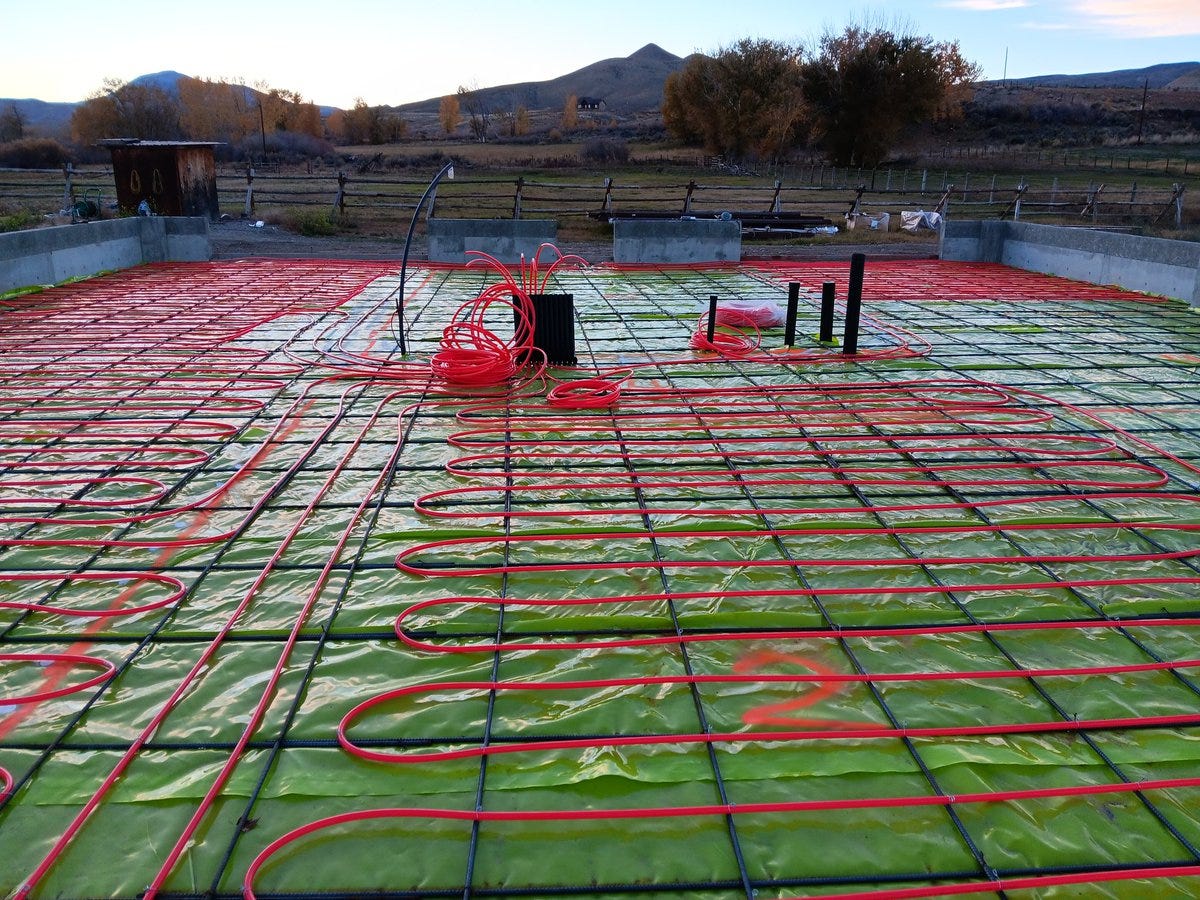
This heat does not need to be an add-on to the house, either. Buildings can have Bitcoin integrated into their structure, like the project above (from Softwarm LLC) which was designed specifically to be heated with a 30kW miner array. Currently it returns a very large chunk of the cost of heating, thanks to its high efficiency miners. This building is possibly the first of its kind, and I doubt it will be the last.
So it works for the home, now let’s go to Finland to see how it works for entire districts.

District Heating
Being in a colder climate, Finland is one of a number of European countries that uses district heating in winter. In the 1950s they began using district heating to make heat cheaper, more reliable, and more efficient for the surrounding community. To achieve this, they create the heat in a central location and then distribute it to all the buildings in the area, using either pipes or vents.
Unfortunately, about 90% (source) of global district heating still comes from fossil fuels. Fossil fuels require hard work of digging it out of the ground, processing, transportation, etc., so they tend to be more expensive than renewable energy per watt, as well as being polluting and reducing air quality.
So now let’s see what happened when they applied Bitcoin.
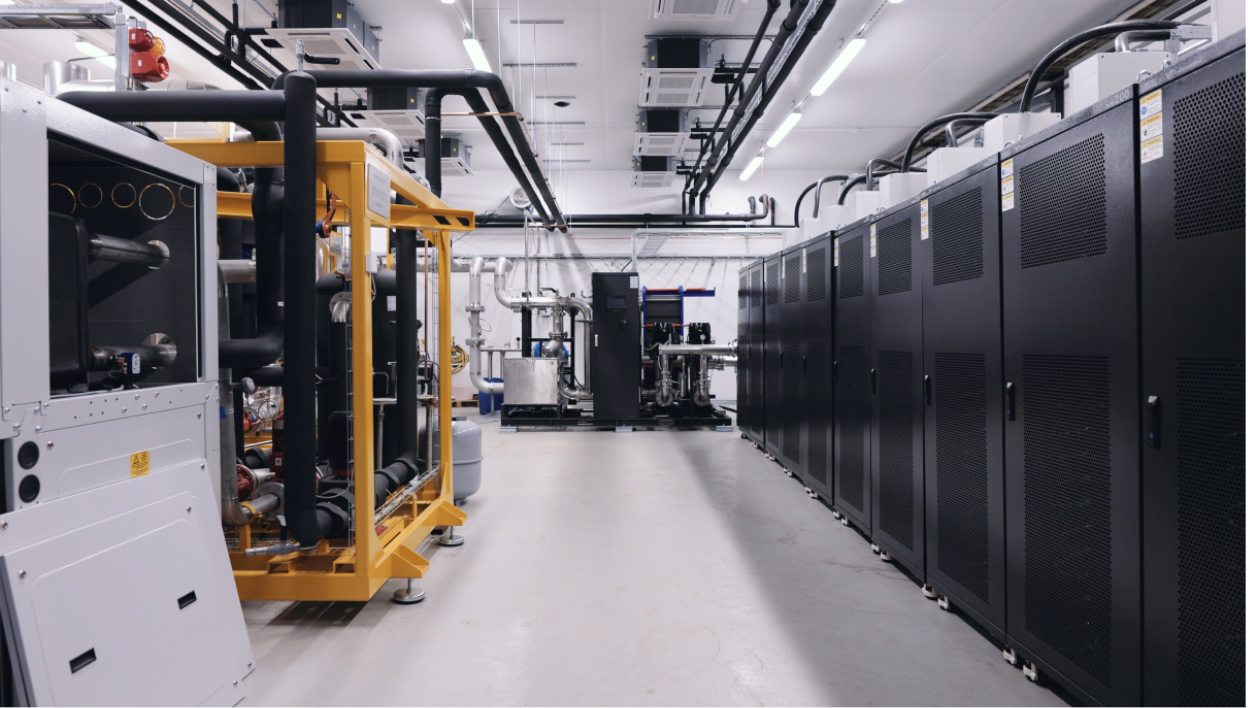
The governments of these communities worked with a Bitcoin energy company called MARA to convert some of their district heating to miners. They did this at two sites, Satakunta with 3.5MW of heating running on clean energy, and Seinäjoki at 1MW of heating running on grid mix.
The change is estimated to reduce emissions by 500-700 metric tons per year, compared to a standard heated district. This will not only help reduce climate impact, but it will also improve air quality in the local area. This all in addition to subsidizing the heating, of course.
The result of this is that now, over 100,000 people in Finland have their homes heated with Bitcoin miners.
Next up… the heating doesn’t necessarily need to be intended for human comfort.
Industrial Heating
Going back to the aforementioned Softwarm LLC, they are quickly making a name for themselves building all kinds of custom heating solutions around Bitcoin miners. Below is a shot of a system built to heat water for a concrete batch plant.
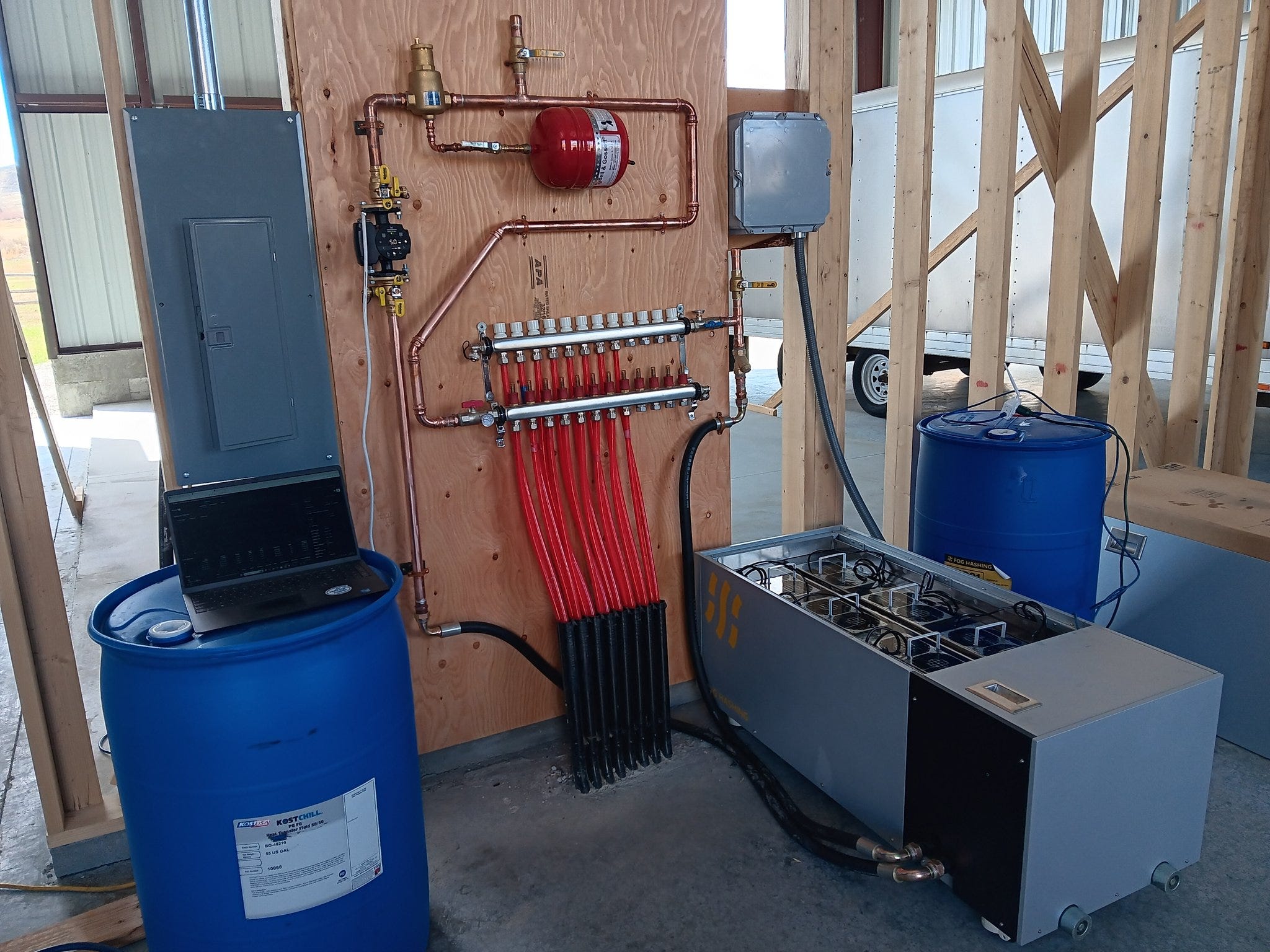
In winter, concrete can freeze before it cures, weakening it. To prevent this, the water needs to be heated before the concrete is mixed. For large batches of concrete, this heating process can take a fair amount of energy, the cost of which adds up fast when concrete is your entire business.
For this concrete plant with Softwarm’s Bitcoin miners installed, that heat is now subsidized. A chunk of their expense just got cut, giving them a competitive advantage simply for doing accounting for the Bitcoin network.
Now let’s take a quick jump over to the Netherlands.
Greenhouse Heating
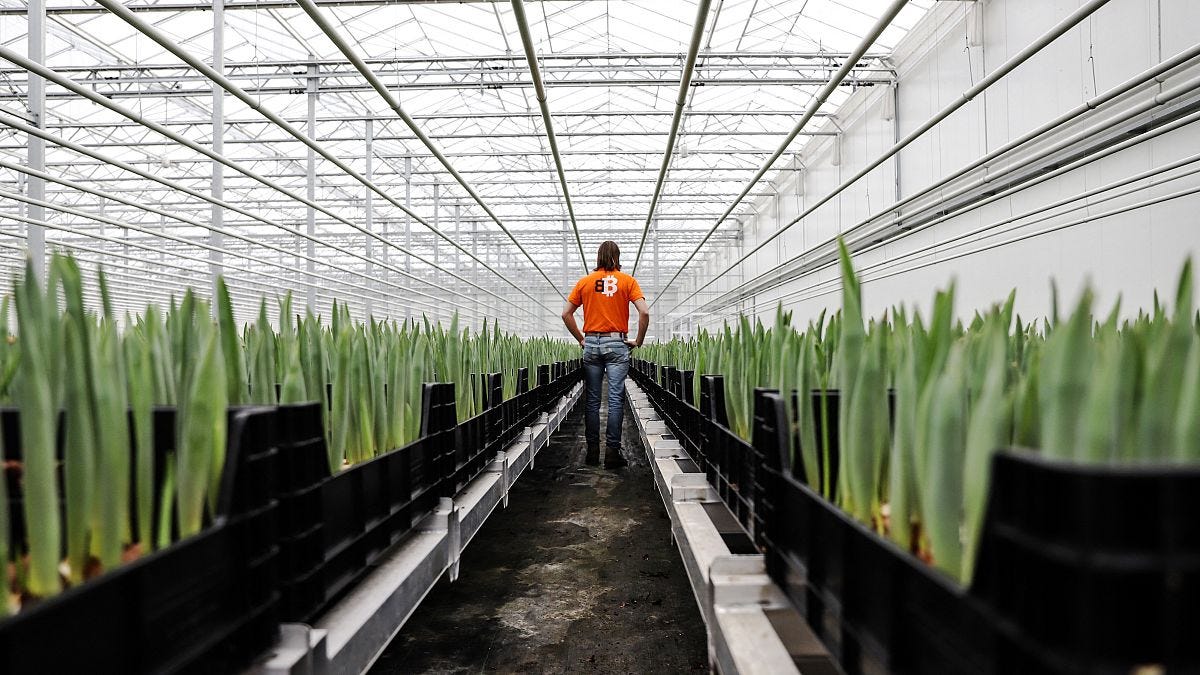
Europe has been suffering from something of an energy crisis over the past few years, and it is not getting any better. This tulip farm in the Netherlands decided to use every edge they can get in their fight against these energy prices, and so they installed Bitcoin miners in their greenhouse.
The miners not only produce warm air to keep the plants happy through colder months, but they are also used to assist in drying the bulbs. They produce Bitcoin to keep the farmers happy, and they produce security to keep everybody else happy.
Win, win, win…
Making atoms jiggle around a bit faster is something we find ourselves doing quite often, as the industrious creatures that we are. It is something we will always need to do, and the Bitcoin network will always need to be secured.
Bitcoin mining can give at least a competitive edge - if not a very real lifeline of survival - for those with high heating needs and rising energy costs.
The caveat to keep in mind here is that purchasing a miner heating setup will only be profitable either over long time periods, or with very high energy needs. Also, the BTC earned is heavily dependent on the overall network hash rate, i.e. how many others are mining. Once the equipment is paid for, though, the beauty of this is that the Bitcoin earned is a bonus. It is money that you wouldn’t have otherwise received.
My mind frequently returns to the question of what the energy sector will look like in 50 years with these dynamics in place and… well… it sounds crazy.
It sounds insane to suggest that in a few years, many more people will heat their homes with their monetary system. And that every energy company will eventually secure that monetary system with excess power. It makes no sense. And yet… these things are already happening today, all over the world, with great success.
Be warm and excellent to each other.
Absolutely 💯